Article • Sanctions Watch
CEPR Sanctions Watch September 2025
Article • Sanctions Watch
In this edition of Sanctions Watch, covering September 2025:
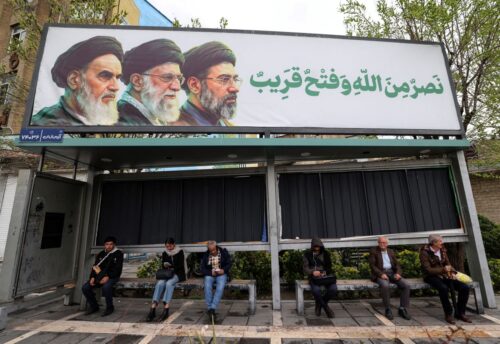
This past Sunday, the United Nations reimposed sanctions that had been lifted on Iran under the terms of the 2015 nuclear deal. The 30-day “snapback” sanctions process had been initiated by the “E3” nations — France, Germany, and the United Kingdom — last month. While Iran reached an agreement with the International Atomic Energy Agency (IAEA) to allow a limited resumption of nuclear facility monitoring earlier this month, the European nations felt that the terms were insufficient, and Iran and the E3 failed to come to a resolution during talks held on the sidelines of the UN General Assembly. A proposal tabled by the UN Security Council president South Korea to delay the implementation of the snapback sanctions received only four out of 15 votes at the security council, as did a last-minute proposal led by Russia and China. As the deadline neared, Iran’s Supreme National Security Council warned that the country would suspend IAEA cooperation if the sanctions went into effect. Iranian lawmakers have warned that they could respond to the snapback by withdrawing from the Nuclear Non-Proliferation Treaty, though President Masoud Pezeshkian has denied the possibility.
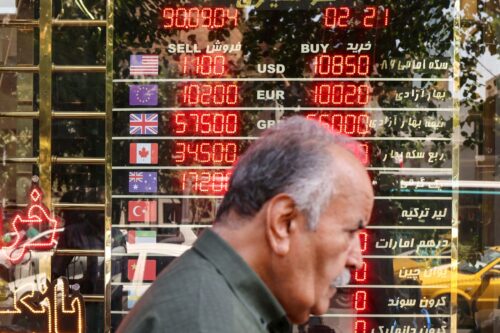
As reported by the Center for International Policy’s Sina Toossi, Iran’s Parliament Research Center published a report arguing that while the UN sanctions are likely to cause some damage and market volatility, they pale in comparison to the US’s unilateral secondary sanctions, which are a leading source of Iran’s economic challenges. While UN sanctions are generally more targeted and aimed at nuclear proliferation, US secondary sanctions — which punish actors from third-party countries for engaging with certain sectors of Iran’s economy — are broad-based and intended to paralyze entire sectors. The initial reimposition of the snapback sanctions saw the rial fall to a new record low at a time of already high inflation, particularly impacting food prices. According to expert Esfandyar Batmanghelidj, “A higher free market exchange rate will add inflationary pressure, but the jury is still out on whether snapback will really change Iran’s balance of payments.”
Read more:
Syrian President Ahmed al-Sharaa met with US Secretary of State Marco Rubio in New York this month on the sidelines of the UN General Assembly in part to push for the formal lifting of Caesar Act sanctions following US President Donald Trump’s issuing of a temporary waiver earlier this year. Rubio “underscored this opportunity for Syria to build a stable and sovereign nation following President Trump’s historic announcement earlier this year on sanctions relief for the Syrian people,” but the administration has not yet given public direction to Republican lawmakers to fully repeal the act, nor has it sought to extend or expand presidential waiver powers.
The US Congress is divided over whether to repeal the act, with bipartisan coalitions both in favor and opposed. The Senate version of the National Defense Authorization Act (NDAA) includes language to repeal the act, which has been championed by Senators Jeanne Shaheen (D-NH) and Rand Paul (R-KY). Following a trip to Syria, Shaheen noted that sanctions are “preventing investment in the country and the prosperity and opportunity that people want to see in the future.” Senators Lindsey Graham (R-SC) and Chris Van Hollen (D-MD), however, are pushing for an amendment that would place conditions on repeal, including the protection of religious minorities and, more controversially, the maintenance of peaceful relations with Israel. These conditions, one economist told The New Arab, could delay sanction relief, which might, in turn, “trigger further contraction, raise import costs, and worsen shortages of essential goods such as food and medicine.” On the House side, an amendment to the NDAA that would repeal the Caesar Act was voted down this month, setting the stage for a contentious reconciliation process.
Read more:
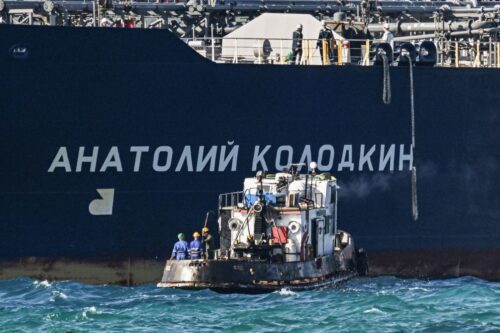
This month, amid mounting pressure from Congress and the lack of progress toward peace in Ukraine, President Trump announced that the United States would be ready to impose “major sanctions on Russia.” Yet Trump — who has repeatedly flip-flopped on Russia sanctions — made the move conditional on NATO members and G7 allies doing the same and on their agreement to impose secondary tariffs of 50 to 100 percent on China and India for purchasing Russian oil. As a result, the EU’s 19th package of sanctions was briefly delayed, but the contents were made public on September 19. Among other things, the proposed measures include moving up the deadline for a total ban on Russian liquefied natural gas imports by one year to January 1, 2027; sanctioning 118 vessels in Russia’s “shadow fleet” of oil tankers used to evade sanctions; imposing full transaction bans on major Russian energy companies and certain Russian and thirdcountry banks; and targeting refineries, oil traders, petrochemical firms, and crypto platforms in Russia and third countries, including China.
This, however, was not enough for President Trump, who stated during his speech at the UN General Assembly that, “in the event that Russia is not ready to make a deal to end the war, then the United States is fully prepared to impose a very strong round of powerful tariffs … but for those tariffs to be effective, European nations … would have to join us in adopting the exact same measures” and “immediately cease all energy purchases from Russia.”
Following the EU’s July decision to lower the price cap on Russian oil from $60 to $47 per barrel, Japan, Australia, and New Zealand adopted the same measure this month. These countries also targeted vessels from Russia’s shadow fleet as well as Russian individuals and entities allegedly linked to the war in Ukraine. The UK, meanwhile, sanctioned 11 groups and individuals accused of involvement in Russia’s forcible transfer of Ukrainian children, along with 70 shadow fleet ships and 30 entities and individuals alleged to be supplying equipment and weapons to Russia’s military. The EU also renewed its sanctions on individuals connected to Russia’s war in Ukraine for another six months.
As reported by POLITICO, the European Commission has floated a “legally creative” proposal to use the $250 billion in Russian assets frozen in Europe for Ukraine. At present, these assets sit at the Belgian clearing house Euroclear, a private entity, and the income they generate is being channeled toward a $50 billion G7 loan to Kyiv. Both European countries and Euroclear, however, remain cautious about directly seizing the underlying assets due to legal concerns and potential implications for the EU’s role in the global financial system.
The new plan — dubbed the “reparation loans” idea — is tied to the fact that most of Russia’s frozen assets have matured into cash and must therefore, under Euroclear rules, be transferred from the clearing house to the European Central Bank (ECB). Since the ECB’s investment of these funds yields relatively little, one option under discussion is to swap Euroclear’s Russian cash for zero-interest bonds issued by the European Commission (EC) and backed either by all EU member states, a subset of them, or even non-European G7 countries. A special-purpose vehicle created by these countries would then hold the swapped cash and invest it more profitably to fund the reparation loan, with Kyiv required to repay only if Moscow eventually agrees to compensate Ukraine for the damage caused by the war. The plan is still in its early stages, with key parts still unclear and under discussion. On September 26, news emerged of another similar proposal from the EC — backed by Germany —under which the EC would borrow Euroclear’s frozen Russian assets to fund a $160 billion, zero-interest loan to Ukraine. According to Bloomberg, “at the same [time], the EU would enter a ‘tailored debt contract’ with Euroclear at a 0% interest rate to ensure the Belgium-based clearing house can honor any potential future Russian claims.” The operation would be guaranteed by EU member states.
Read more:
Leading genocide scholars and the UN Independent International Commission of Inquiry on the Occupied Palestinian Territory have declared that Israel is committing genocide against the Palestinian people in Gaza, with its blockade of humanitarian aid identified as a central instrument of the genocide. In its report, the UN commission of inquiry states:
The Commission finds that Israel used starvation as a method of warfare by imposing a total siege on Gaza and blocking humanitarian aid from entering into Gaza.… Palestinians in Gaza have continued to suffer the effects of the total siege, which encompassed the cutting of food and water, fuel, electricity and medical supplies into Gaza, even after occasions when Israel permitted very limited humanitarian aid to enter. At no time has the aid been adequate to sustain life in Gaza.
Several countries have also explicitly called Israel’s actions in Gaza a genocide at the UN and elsewhere this month, including Colombia, Chile, Brazil, Bolivia, Slovenia, Spain, South Africa, Turkey, Qatar, Kyrgyzstan, Malaysia, and others.
The UN commission of inquiry report also criticized the US- and Israeli-backed Gaza Humanitarian Foundation (GHF) — the main organization authorized by Israel to distribute aid — which, according to a BBC investigation this month, employs members of an Islamophobic biker gang from the US as security contractors. Aid distribution at GHF sites is disorganized and difficult to access, with Israeli forces and security contractors firing on Palestinians near these locations, killing more than 1,200 people since May. The UN commission of inquiry concluded in its report that:
The intention of the Israeli authorities to continuously impose starvation and unliveable conditions of life for Palestinians in Gaza is also evident through the establishment and use of the GHF to maintain total control over aid distribution in Gaza. Notably, the GHF does not distribute any essential items other than food, and all four distribution sites are in militarised zones, none of which is situated in northern Gaza, making it extremely difficult — and at times, impossible — for many Palestinians to access food.
Nevertheless, the UN Office for the Coordination of Humanitarian Affairs warned on September 18 that “opportunities to support starving people are being systematically blocked. Every week, new restrictions are imposed.” On September 12, Israel launched a ground offensive in Gaza City, forcing people southward and cutting supply lines into the city, further deepening the famine it has created.
In response to Israel’s actions in Gaza, Spain, Belgium, and Slovenia announced unilateral sanctions against the country. Among other steps, Madrid will ban the use of Spanish ports and air space for transporting fuel or weapons to Israel and propose legislation to formalize its arms embargo. Meanwhile, Ljubljana imposed a travel ban on Israeli Prime Minister Benjamin Netanyahu, and Brussels announced a ban on imports from Israeli settlements in the West Bank and a review of public procurement policies involving Israeli companies. The European Commission also proposed measures against Israel, including higher tariffs on certain Israeli goods and sanctions on two Israeli ministers, though these measures still need to be approved by a majority of member states. And, on the sidelines of the UN General Assembly, more than 30 countries took part in a meeting convened by The Hague Group, which, according to a statement, sought “to consolidate [concrete] measures into a coordinated global strategy to halt the Gaza genocide.” Meanwhile, the US imposed sanctions on three Palestinian human rights groups on September 4 over their engagement with the International Criminal Court, whose members the US had previously sanctioned. The UN High Commissioner for Human Rights, Volker Türk, has called for these sanctions to be revoked. In the US House of Representatives, the Congressional Progressive Caucus voted in its majority to endorse a bill to end US arms transfers to Israel.
Read more:
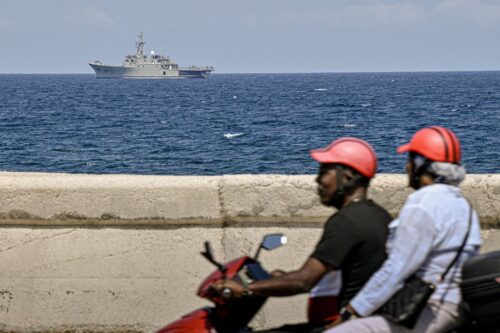
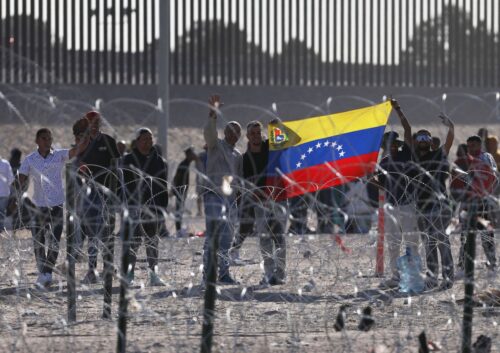
Controversial deadly US airstrikes targeting Venezuelan boats, along with a US military buildup in the Caribbean Sea and threatening rhetoric from the Trump administration, have prompted fears that the administration intends to or is risking igniting a war with Venezuela. These moves mark a major shift from Trump’s July decision to modestly ease US sanctions by renewing a license for Chevron to operate in Venezuela — a measure seen at the time as a small victory for the proponents of engagement within the administration.
Late last month, former US ambassador to Venezuela James Story, who served in the position from 2018 to 2023, recognized in an interview to Guacamaya that sanctions “were designed to hurt the economy.” While sanctions critics have long argued that their impacts are purposefully indiscriminate, the intent is rarely so bluntly admitted by top policymakers.
Read more:
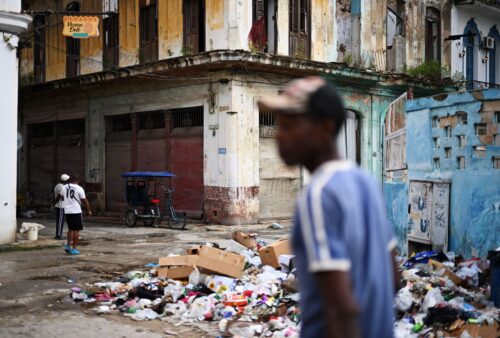
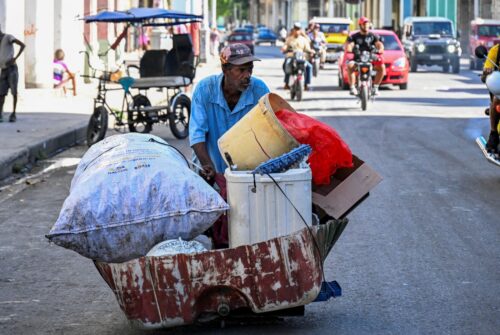
The Cuban government released its annual report estimating the costs of the US embargo to its economy this month, finding that in the 12 months beginning March 2024, the country sustained $7.5 billion in damages, bringing the total since inception to over $170 billion. In 2018, the UN Economic Commission for Latin America and the Caribbean affirmed the Cuban government’s estimates. The government also claims that, without the embargo, the Cuban economy would have grown at a rate of 9.2 percent in 2024 — in actuality, the economy shrank by 1.1 percent.
Opening the UN General Assembly this month, Brazilian president Luiz Inácio Lula da Silva said, “It is unacceptable that Cuba be listed as a state that sponsors terrorism.” The High-level Week that opens the General Assembly each year frequently proves to be a popular forum for decrying US policies toward Cuba. As documented in the September 2024 Sanctions Watch, last year’s General Assembly saw the leaders of over 30 countries explicitly condemn the embargo and call for its removal. A similar documentation of this year’s remarks will be provided in next month’s edition of the newsletter.
Also this month, fugitive former member of the Black Liberation Army Assata Shakur passed away of natural causes in Cuba. Cuba’s harboring of Shakur and other revolutionaries has been cited as one reason for Cuba’s State Sponsor of Terrorism designation, which is widely seen as baseless.
Read more:
On August 31, a 6.0-magnitude earthquake struck Afghanistan, killing more than 2,200 people and displacing around 23,000. Sanctions on the country have hampered the authorities’ response, with journalist Freshta Jalalzai reporting in The Diplomat that:
Survivors are waiting for shelter, clean water, sanitation, and medical care that never arrives quickly enough, while the Taliban government, already crippled by sanctions and a collapsed economy, is struggling to manage a catastrophe of this magnitude. Afghanistan’s humanitarian catastrophe is not only the result of natural disasters or political repression, but to a large extent the predictable outcome of sanctions that strangle the economy, and cut off financial lifelines.… Sanctions and international isolation have left the Taliban government weakened and fragile. Natural disasters, along with thousands of refugees returning from Pakistan and Iran, add further strain to a system already hanging by a thread, creating fertile ground for the Islamic State to recruit among desperate youth.
This assessment aligns with broader UN findings on Afghanistan’s deteriorating situation. In a recent report on human rights in Afghanistan, the UN’s Human Rights Office made clear that the “economic and financial situation of the country, including sanctions and frozen State assets” has exacerbated the multiple crises that Afghans face, including “economic crisis, persistent unemployment, limited access to basic services and frequent climate disruptions, such as severe droughts and floods.” The report specifically notes that “decreasing international financial assistance in 2025, and the continued freeze on Afghan State assets, has exacerbated the dire economic situation of millions of Afghans and their families across the country[,] pushing much of the population into deeper poverty and precarity.”
These concerns have also been echoed at the UN General Assembly. Kyrgyz President Sadyr Zhaparov urged the return of Afghanistan’s frozen assets, declaring:
We believe that the use of financial instruments for geopolitical and ideological gain, thereby deepening the humanitarian crisis [in Afghanistan], is an act of injustice and inhumanity. Therefore, we are convinced that the assets of Afghanistan frozen by Western countries in the amount of $9 billion must be returned to the Afghan people as soon as possible.… According to UN data, in 2025, 15 million people in Afghanistan face hunger, and 24 million require humanitarian assistance.… We call upon the leaders of Western countries to immediately return these assets for the sake of the future of the Afghan people. If you truly want the Afghan people to overcome poverty and hunger as soon as possible, return them without delay. Only then will your words about human rights and inter-state obligations correspond to your actions.
China, Pakistan, Russia, and Iran also called for the return of Afghanistan’s assets and the lifting of unilateral sanctions in a joint statement issued on the sidelines of the UN General Assembly.
As part of a broader sanctions campaign against Tehran, on September 19 the Trump administration revoked a 2018 sanctions waiver that had facilitated trade and reconstruction efforts in Afghanistan through Iran’s Chabahar port. President Trump also threatened Afghanistan, warning that “bad things are going to happen” if the US is not granted control over Bagram airbase, which US forces abandoned during the Taliban’s return to power. It remains unclear whether this threat implies additional sanctions, but the Taliban have rejected Trump’s demand outright.
Read more:
This month, the Trump administration imposed sanctions against Viviane Barci de Moraes, the wife of Brazilian Supreme Federal Court Justice Alexandre de Moraes whom the US had sanctioned in July. The move followed the court’s conviction of former president Jair Bolsonaro, a Trump ally, on crimes related to attempting a coup. The administration simultaneously revoked the visas of six former and current officials, including Solicitor-General Jorge Messias. Earlier in the month, President Lula da Silva authored an op-ed in The New York Times defending Brazil against these violations of sovereignty, along with the tariffs that Trump has wielded effectively as sanctions. Lula wrote: “Resorting to unilateral action against individual states is to prescribe the wrong remedy. Multilateralism offers fairer and more balanced solutions.… The lack of economic rationale behind these measures makes it clear that the motivation of the White House is political.”
Despite similar criticisms of the US’s unilateral coercive measures at the UN General Assembly, Lula reportedly charmed President Trump in a brief private encounter, leading to some speculation of potential for warming relations.
Read more:
South Korean President Lee Jae-myung stated in an interview with Time that he is open to partially easing or lifting sanctions on North Korea in exchange for Pyongyang’s halting its nuclear weapons program, saying, “I believe that if we continue to apply the current pressure then … North Korea will continue to produce more bombs.” In a separate interview with Reuters, he stated, “The reality is that the previous approach of sanctions and pressure has not solved the problem; it has worsened it. “ Accordingly, President Lee has encouraged President Trump to meet with North Korean leader Kim Jong Un during Trump’s upcoming visit to South Korea. Kim Jong Un, for his part, has rejected diplomatic overtures from South Korea, but he publicly stated for the first time since Trump returned to office that he would be open to engaging with the Trump administration so long as it recognizes the “reality” that North Korea is a nuclear-armed state.
Read more:
On September 15, the UN Special Rapporteur on the negative impact of unilateral coercive measures on the enjoyment of human rights issued a report which, according to an accompanying statement, stressed that:
Sanctions undermine a wide range of rights, including the right to property which is undermined by comprehensive, sectoral and targeted measures, such as asset freezes, especially when they are accompanied by confiscation.… The right to work is also affected, resulting in increased unemployment, wage reductions, deteriorating working conditions and informalisation, as well as a negative impact on small and medium-sized enterprises and entrepreneurs. Other rights are also disrupted, including health, food, education, water and sanitation, and an adequate standard of living. Vulnerable groups are disproportionately affected.
Relatedly, UN High Commissioner for Human Rights Türk addressed a UN panel on sanctions and human rights, stating:
Unilateral coercive measures that are inconsistent with international law pose serious risks to the enjoyment of human rights. Where sanctions are imposed on entire sectors of an economy, with sweeping impacts, they can prevent people from accessing the essentials of life. In conflict and crisis situations, they can hinder the provision of humanitarian aid, by halting the purchase or import of goods or the payment of fees. They can interfere with the proper functioning of essential health and education systems. They can undermine the right to work, to housing and to social security. They can disrupt the provision of basic goods, and jeopardize the availability, quality, and affordability of food and clean water.
The US Department of Treasury announced its largest batch of sanctions against Ansar Allah to date this month, targeting 36 individuals, entities, and ships alleged to be helping the organization, which governs the majority of the Yemeni population, raises funds, and procures weapons.
Also this month, the Trump administration revoked the visa of Colombian president Gustavo Petro following remarks made at a pro-Palestine rally in New York urging US soldiers to “disobey the orders of Trump” and “don’t point your rifles against humanity.” Separately, the US Department of State announced that it would be restricting the visas of certain Central American nationals that it alleges to be “intentionally acting on behalf of the Chinese Communist Party.” The names of those targeted and the nature of their alleged actions were not provided. On September 22, the State Department also designated two former Haitian lawmakers for their alleged involvement in corruption, banning them from entering the US.
President Trump additionally signed an executive order on September 5 authorizing the Secretary of State to designate foreign countries that “wrongfully detain” US citizens as “state sponsors of wrongful detention,” allowing sanctions to be imposed against them. Reuters notes that China, Iran, and Afghanistan are among the countries that could be targeted.
Read more:
Economic sanctions have become one of the main tools of US foreign policy despite widespread evidence that they can cause severe harm to civilian populations (which may, in fact, be the point). Though now a defining feature of the global economic order, sanctions and their human costs receive relatively little attention in most US media outlets.
CEPR’s Sanctions Watch news bulletin aims to generate more awareness on the use and impact of sanctions through monthly round-ups of news and analysis on US sanctions policy.
Previous editions of the Sanctions Watch can be found here. CEPR’s US Sanctions Policy FAQ can be found here.
Article
Article
Article
Article
Article
Article
Article

Report